
How to Stretch Your Hips
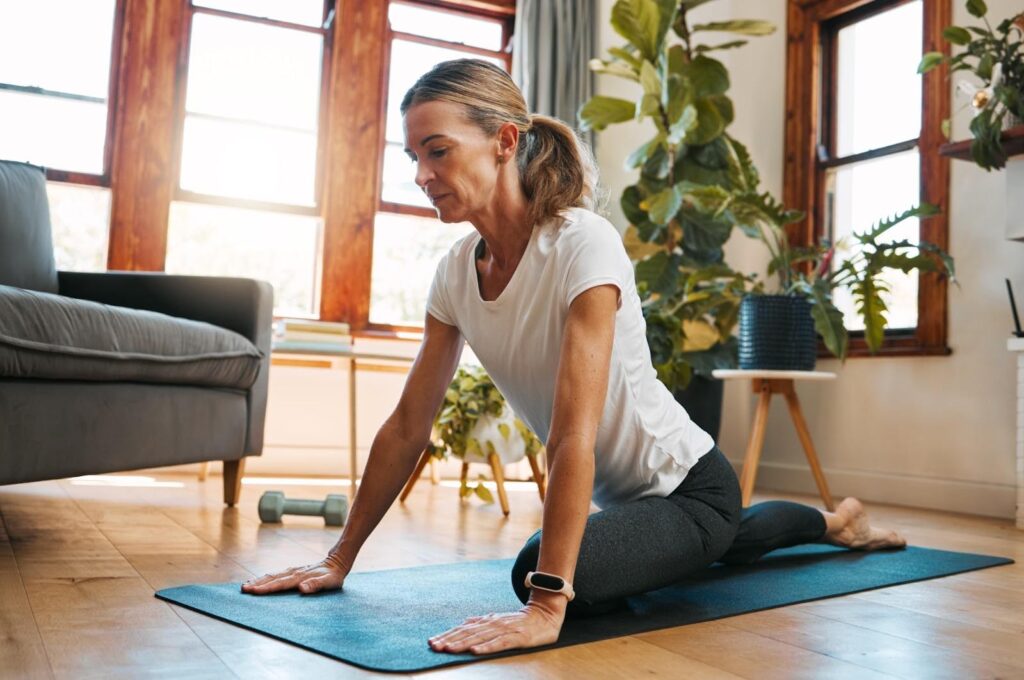
If you sit for work, train hard in the gym or spend long hours driving, tight hips can sneak up on you fast. Learning how to stretch hips properly can improve mobility, reduce low back tension and help you move more efficiently in workouts and everyday life.
At Method Gym, we see it all the time. Limited hip mobility affects squat depth, running mechanics, posture and even shoulder function. The good news? With the right approach, you can unlock better movement and feel the difference quickly.
Why Hip Mobility Matters
Your hips are one of the most powerful and mobile joints in the body. They’re designed for strength, rotation and stability. But modern life often limits their full range of motion.
When hips are tight, you may notice:
- Low back discomfort
- Knee pain
- Reduced squat depth
- Limited stride length when running
- Stiffness after sitting
The key is not just stretching randomly but understanding how to stretch hips effectively and consistently.
The Best Hip Stretches
Before jumping into stretches, remember: mobility is more than just pulling on a muscle. The best results come from combining breathing, control and gradual range of motion.
Here are five effective hip stretches you can add to your next workout or mobility session to help improve flexibility, reduce tightness and move more comfortably.
1. Half-Kneeling Hip Flexor Stretch
Targets: Hip flexors (psoas and rectus femoris)
How to do it:
- Start in a half-kneeling position.
- Tuck your pelvis slightly (posterior tilt).
- Gently shift your hips forward.
- Raise the arm on the kneeling side for a deeper stretch.
Hold for 30–45 seconds per side while breathing slowly through your nose.
Pro tip: Don’t arch your lower back. The stretch should be felt in the front of the hip, not the spine.
2. 90/90 Hip Rotation Stretch
Targets: Internal and external hip rotation
How to do it:
- Sit with one leg bent in front at 90 degrees.
- Position the other leg behind you at 90 degrees.
- Keep your chest tall and lean forward over the front shin.
- Switch sides slowly with control.
This stretch improves rotational capacity, which is essential for squats, lunges and athletic performance.
3. Pigeon Stretch
Targets: Glutes and deep hip rotators
How to do it:
- Bring one knee forward under your chest.
- Extend the opposite leg behind you.
- Keep hips square to the floor.
- Lower your chest toward the ground if comfortable.
Hold for 30 seconds while focusing on slow breathing.
If traditional pigeon feels too intense, modify it by staying upright or lying on your back in a figure-four stretch.
4. Deep Squat Hold
Targets: Full hip complex, ankles and groin
How to do it:
- Stand with feet slightly wider than shoulder-width.
- Lower into your deepest squat.
- Keep your chest tall.
- Use your elbows to gently press your knees outward.
This is one of the most functional ways to stretch hips because it reinforces strength at end range.
5. Frog Stretch
Targets: Adductors and inner thighs
How to do it:
- Start on hands and knees.
- Widen your knees as far as comfortable.
- Keep ankles in line with knees.
- Rock gently back and forth.
Move slowly and breathe deeply. This stretch can significantly improve squat depth over time.
How Often Should You Stretch Your Hips?
If you want to improve hip mobility, consistency is more important than pushing hard during every session. For general mobility maintenance, stretching 3–4 times per week is a good target. If you spend most of your day sitting, consider adding brief daily mobility sessions of about 5–10 minutes. Try using dynamic mobility exercises before workouts and longer, slower static stretches after training sessions. You’ll see the best results when you combine stretching with foam rolling and controlled mobility work.
Stretching vs. Mobility: What’s the Difference?
Stretching can help temporarily lengthen tight muscles, while mobility training focuses on improving control, strength and stability through that range of motion. A well-rounded approach goes beyond static stretching. That’s why we incorporate myofascial release, breathing drills, active range of motion exercises and strength work at end range to help create longer-lasting improvements rather than short-term relief.
Signs Your Hips Need Attention
You may need to prioritize hip mobility if:
- Tightness or discomfort in your hips after sitting for long periods
- Limited range of motion during everyday movements
- Stiffness when you first start moving after resting
- Discomfort in your lower back, glutes, or thighs
- Difficulty moving smoothly during workouts or physical activity
Improving how you stretch your hips can enhance both performance and injury prevention.
Stretch Your Hips at Method Gym
Ready to move better, feel stronger and take your workouts to the next level? At Method Gym, our training, classes and programs are designed to help you build strength, improve mobility and reach your fitness goals in a supportive environment. Whether you’re just starting out or looking to push your performance further, we’re here to help you find your method. Contact us to learn more about getting started.